
About Us
ELEKTROMEC is a dynamic and forward-looking marine spares company that has quickly emerged as a trusted global partner for shipowners, OEMs, and engine builders.

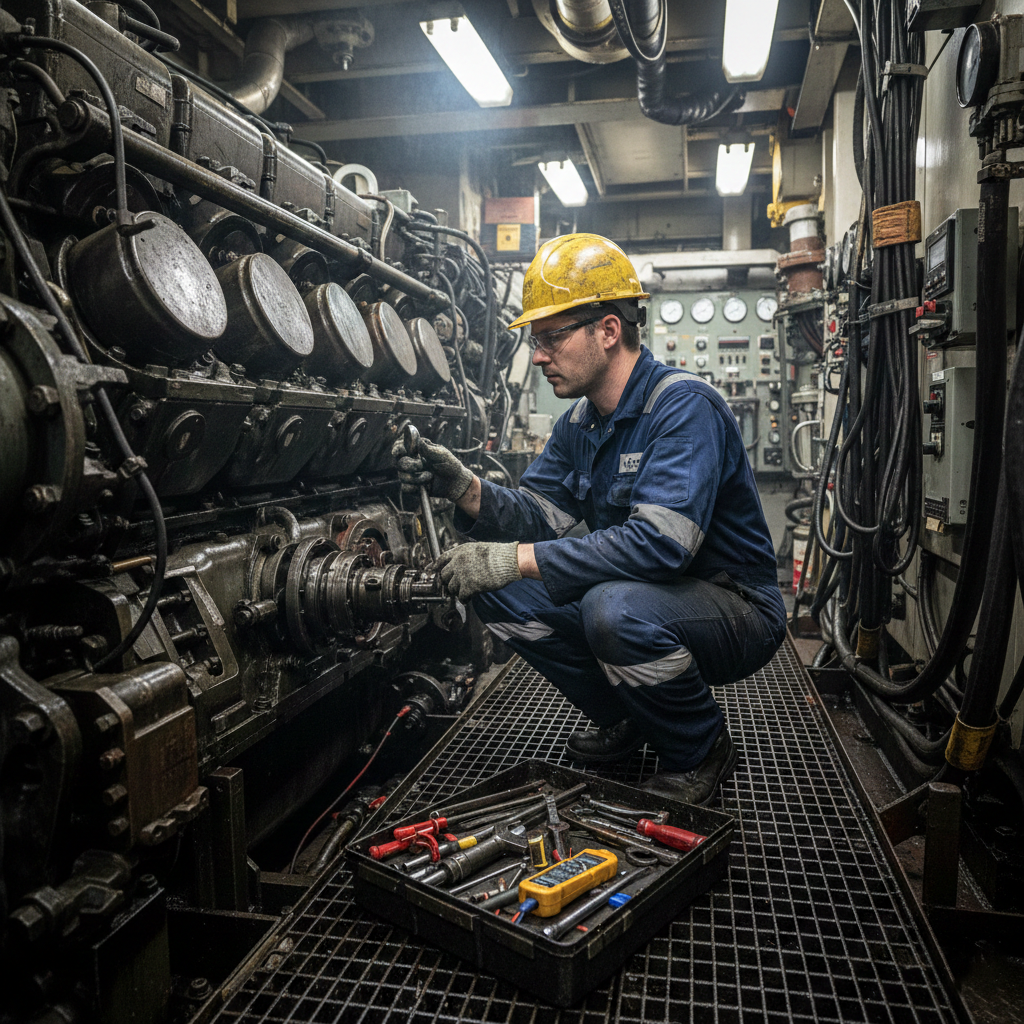
Effective lifecycle management helps shipowners balance reliability, safety, and maintenance cost. Marine engines and auxiliary systems operate continuously under heavy loads, harsh temperatures, vibration, and corrosive saltwater environments. Over time, every component experiences wear — but not every worn part must be replaced immediately.
A smart repair vs replace strategy ensures optimal use of spare parts while maintaining operational efficiency. The key lies in understanding component condition, performance limits, and long-term cost implications.
Lifecycle management is more than routine maintenance — it is a strategic approach to managing equipment health throughout its operational life. Poor lifecycle decisions can lead to:
Unexpected breakdowns at sea
Costly emergency repairs
Increased downtime
Safety risks and compliance issues
On the other hand, effective lifecycle planning helps shipowners:
Extend equipment life
Reduce overall maintenance cost
Improve vessel availability
Maintain class and regulatory compliance
Repair is ideal when wear remains within OEM tolerance limits, and the component’s structural integrity remains intact. Many marine parts are designed to be overhauled multiple times using approved repair kits.
Repair is recommended when:
Surface wear is minimal and measurable
No cracks or deformation are present
OEM repair or overhaul kits are available
Performance can be restored to acceptable limits
The cost of repair is significantly lower than replacement
Common repairable components include:
Fuel injectors and valves
Pumps and seal assemblies
Turbocharger cartridges
Heat exchangers and coolers
Bearings and gasket sets
Repairing these components reduces cost while maintaining reliable performance when done using genuine parts and proper procedures.
Replacement becomes unavoidable when a component exceeds its wear limits or poses a risk of failure. Continued operation of heavily worn parts can result in catastrophic damage to surrounding systems.
Replacement is necessary when:
Wear exceeds OEM tolerance limits
Cracks, corrosion, or fatigue are visible
The component has suffered overheating or seizure
Performance cannot be restored through repair
Repair cost exceeds 50–60% of the new part cost
Safety or class compliance may be compromised
Typical components requiring replacement:
Cylinder liners and pistons
Crankshaft and connecting rods
Turbocharger turbine blades
Gear assemblies
Electronic control units beyond repair
Timely replacement prevents secondary damage and ensures reliable long-term operation.
Every critical marine component has defined lifecycle thresholds based on:
Running hours
Load cycles
Temperature exposure
Vibration levels
OEM-recommended service intervals
Monitoring these parameters through inspections, performance data, and maintenance logs allows engineers to identify when parts approach end-of-life. Acting before failure enables planned maintenance instead of emergency repairs.
A common mistake is choosing between repair and replacement solely based on immediate cost. True lifecycle decisions must consider:
Risk of failure at sea
Impact on vessel downtime
Cost of collateral damage
Safety of crew and equipment
Long-term reliability
A cheaper repair may result in a higher total cost if it leads to repeated failures. Strategic replacement, though initially expensive, may save significantly over time.
Whether repairing or replacing, the use of genuine or OEM-approved spare parts is critical. These parts ensure:
Correct tolerances and material strength
Compatibility with existing systems
Predictable performance after maintenance
Compliance with class and safety standards
Inferior parts may shorten the lifecycle, increase failure risk, and negate maintenance efforts.
Repair vs replace is not just a maintenance choice — it is a strategic decision that defines vessel reliability, safety, and cost efficiency. By understanding wear limits, evaluating risks, and using genuine spare parts, shipowners can extend equipment life while avoiding costly failures.
Smart lifecycle management ensures marine assets deliver peak performance, voyage after voyage.
By using form you agree with the message storage. You can contact us directly now


No comments yet.